



AI search optimization is about becoming the trusted source that generative search engines quote, summarize, and recommend across ChatGPT-style assistants, Perplexity, Gemini, and evolving AI overview SERPs, unlike classic SEO, which leans heavily on keyword rankings and backlinks. AI-first SEO prioritizes natural language clarity, entity consistency, structured evidence, and machine-readable context that models can safely cite. You are building AI-driven visibility that is answering queries. When users ask conversational questions, compare options, or request step-by-step guidance. Here are 10 reliable strategies to earn mentions in AI answers, supported by practical steps, relevant examples, and easy‑to‑follow implementation tips.
Why AI search is the next frontier
Search is shifting from a list of links to synthesized, conversational answers. Users increasingly ask open-ended questions, expect context, and want instant, validated takeaways. If you want to be quoted in AI answers, deliver unmistakably clear, well‑structured, citation‑ready content and don’t neglect the fundamentals: a crawlable site, fast pages, relevant coverage, and trusted links. But it’s no longer sufficient. You also need to make your content easy for AI to parse, summarize, and attribute.
Think of AI-first SEO as two layers:
- Retrieval and eligibility: ensuring models can find, understand, and trust your pages.
- Citation and persuasion: packaging information so it’s likely to be quoted and drives brand preference, even in zero-click environments.
This guide delivers 10 strategies to future-proof your website for AI search ranking factors. From conversational search optimization and Generative Engine Optimization (GEO) to schema, E‑E‑A‑T, UX, multimodal assets, brand/entity building, and continuous analytics.
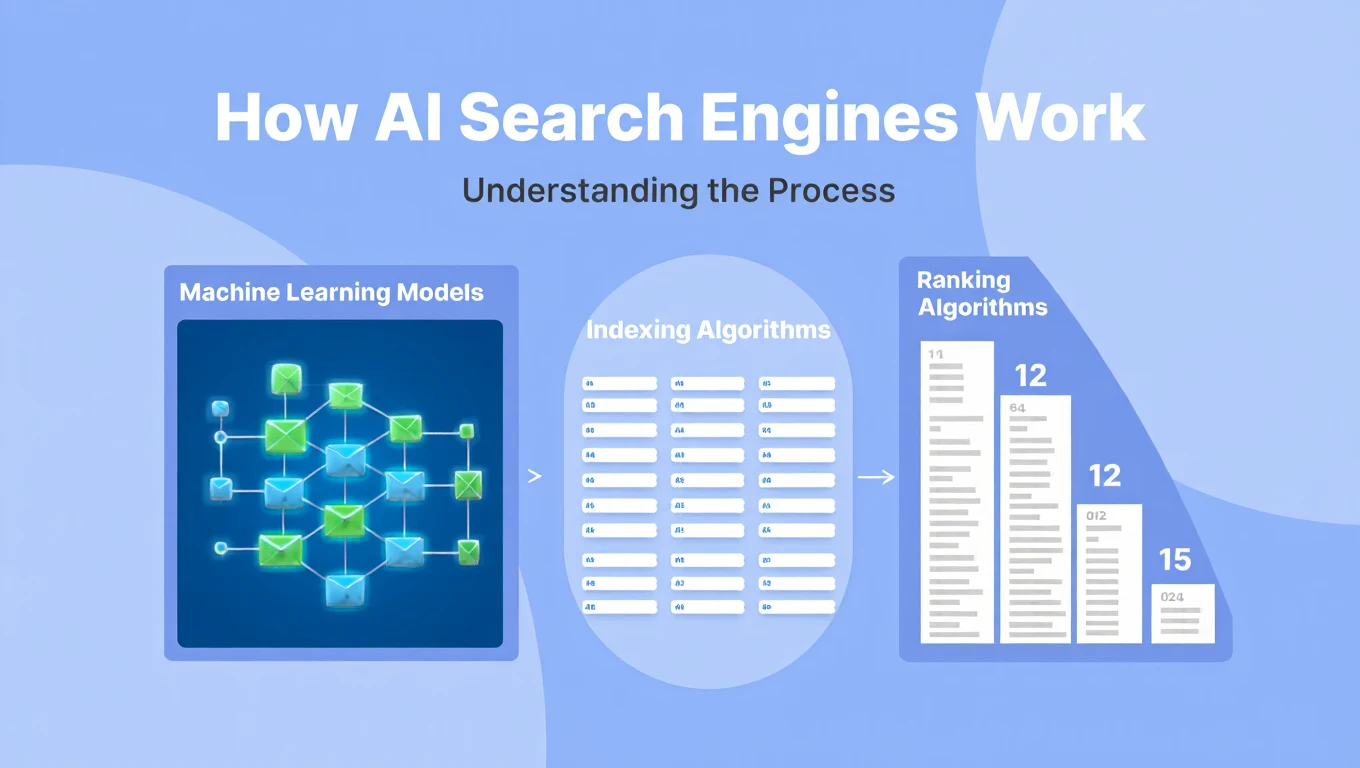
How AI search engines work
Write for meaning, not just matches. Make entities explicit, clarify relationships, and address intent directly; then support your claims and use clean headings so AI can trust and surface your content. When assembling an answer, they look for:
- Explicit, concise passages that resolve the query.
- Consistent entities across the web (your brand, authors, products).
- It’s a way to help AI and search engines understand and trust what’s actually on your page.
Strategy 1: Optimize for conversational queries and context
AI systems mirror how people speak. They thrive on intent-rich questions and clear, direct answers.
- Target long-tail, question-led phrases. Build clusters around who/what/why/how/when, comparisons (A vs B), and alternatives.
- Lead with the answer. Put a 40–80 word summary or definition at the top, then optimize the website for AI search engines. If a user asks, “What is GEO?” the first paragraph should define it plainly before diving into details.
- The foundation of conversational search optimization lies in understanding how people actually talk. Hence, add a Q&A section per page. Use common questions as H3/H4S with succinct answers. Treat each Q&A as a standalone snippet that could be extracted by an AI assistant.
- Help your visitors (and search engines) stay oriented by linking your topics together in a logical way. Descriptive anchor text makes it easy to move through your content and helps AI understand how everything fits.
Implementation tip: pull “People Also Ask” style questions, support tickets, and sales objections to build authentic question sets. Aim for 6–12 Q&As per pillar or service page.
Strategy 2: Focus on Generative Engine Optimization (GEO)
Generative engine optimization is the art of making your content the preferred raw material for generative answers. Think “citeability.”
- Write context‑rich, source-backed passages. Use clear definitions, short factual statements, numbered steps, and named entities that can be quoted verbatim with minimal editing.
- Publish in the ecosystems AI frequently references. Complement your site with YouTube explainers, GitHub readmes (for dev content), SlideShare/LinkedIn documents, or community posts where appropriate. Interlink back to your canonical page.
- Include authoritative comparisons and frameworks in GEO strategies. Generative engines love structured decision aids, matrices, checklists, pros/cons, especially for “best,” “vs,” and “which to choose” prompts.
- Reduce ambiguity. If you introduce a short form, define it once, then own it! Reusing the same definition helps readers stay connected without getting lost in jargon.
Implementation tip: Create a canonical glossary for your domain with concise, quote-friendly definitions. Link glossary terms across your content to reinforce entity clarity.
Read our full breakdown on “what is generative engine optimization (GEO) and how to implement it” for step-by-step GEO strategies that maximize AI citations.
Strategy 3: Build topical authority with structured clusters
Authority isn’t just depth; it’s coverage with coherence.
- Create a strong hub page for each major theme on your site. Surround it with 10–20 smaller, purpose-driven pages like tutorials to gain topical authority.
- Interlink intentionally. Use descriptive anchor text that reflects the specific subtopic (“email security DMARC setup”, not “learn more”). AI search visibility helps models infer relationships and expertise boundaries.
- Close gaps proactively. If a subtopic appears in search queries or customer conversations and you don’t have it, publish it. Authority grows with completeness and navigable structure.
Implementation tip: Lead with clarity, equip the comparison, streamline purchase and implementation, and back it up with rock‑solid troubleshooting and integration support.
Strategy 4: Implement schema markup and knowledge graph signals
- Essential schema: Choose the right schema markup for each template, like Organization and Website for your site identity, Breadcrumb for navigation, Article/BlogPosting.
- Use sameAs links. Connect your brand and authors to consistent profiles (LinkedIn, Crunchbase, GitHub, YouTube) to reinforce identity in knowledge graphs in SEO.
- Keep NAP and branding consistent. Don’t leave your audience guessing. Keep your NAP info and branding identical across every platform.
Implementation tip: validate with Rich Results testing with structured data, monitor for warnings, and maintain a central JSON-LD template library so schema stays consistent across new pages.
Strategy 5: Enhance E‑E‑A‑T with real proof
Experience, Expertise, Authoritativeness, and Trust are now prerequisites for sensitive topics and accelerators for all others.
- Show the humans. Add detailed author bios with credentials, roles, and relevant experience. Link to professional profiles, conference talks, and published research.
- Demonstrate first‑hand experience. Include screenshots, data, test results, original photos, mini case studies, or process notes (“what we tried, what worked, what didn’t”).
- Cite sources and differentiate. Reference standards, reputable studies, or documentation. Then add your unique analysis or field experience so your content isn’t interchangeable.
Implementation tip: add “Reviewed by” lines for YMYL content with subject‑matter experts and date stamps for last updated to signal maintenance. If your content feels genuine, well-researched, and transparent about its sources, you’re already building strong content credibility.
Strategy 6: Optimize for AI summaries and snippets
Design for extraction. Make it easy for assistants to lift a complete, accurate answer.
- Start with an answer box focusing to be noticed on AI summaries that are favourable to Zero-click optimization. Give a crisp 2–4 sentence summary or a short bullet list. Follow with details, and examples.
- Use definition boxes, callouts, and numbered steps. Label components clearly (“Definition, Steps, Pros, Cons, Key Takeaways) to reduce parsing errors.
- Place key stats and claims near their citations. Keep numbers current and traceable to sources you’re comfortable being associated with.
Implementation tip: When you include a table of contents, you make your article effortless to navigate. People can scan and jump to what interests them, and AI systems can follow your structure more intelligently.
Strategy 7: Improve on-site UX and readability
User experience SEO is both a human and a machine signal.
- Speed and stability. Make pages easy to read: keep images light, use caching to speed things up, and ensure mobile pages render cleanly. Skip intrusive pop‑ups and stop content from shifting mid‑scroll.
- Scannable structure. Short paragraphs, generous subheadings, flat bullet lists, and accessible colour contrast. Complex pages should still feel effortless to skim by AI ranking signals.
- Predictable navigation. Logical menus, breadcrumbs, and internal link paths help both users and AI traverse your site’s knowledge efficiently.
Implementation tip: Use consistent H2/H3 patterns across templates (e.g., Definition → Why it matters → How it works → Steps → Examples → FAQs) so models learn your page rhythm.
Implement recommendations from “benefits of good website design for businesses” to create scannable layouts that AI can parse easily.
Strategy 8: Create multimodal AI searches
AI multimedia optimization is increasingly visual and voice-driven. Prepare content to be understood beyond text.
- Images and video. Use descriptive file names, alt text, captions, and transcripts that mention entities, actions, tools, and outcomes. This anchors your media in context to visual SEO.
- Demonstrations and tutorials. Short videos for step-by-step tasks perform well in AI answers. Embed them with surrounding text that explains prerequisites and pitfalls.
- Audio and voice. Give your brand a clear voice: compact FAQ answers, plain language, and phrasing that sounds natural when read aloud.
Implementation tip: Treat transcripts as full content assets. Clean them, add headings, and interlink transcripts often rank and get cited on their own.
Strategy 9: Strengthen your brand’s digital footprint and mentions
AI brand optimization needs confidence in who you are to cite you.
- Entity hygiene. Keep your brand name, logo, description, and key people consistent across your site, social, directories, Wikipedia (if eligible), and data panels.
- Earn authoritative mentions. Guest bylines, conference recaps, interviews, data studies, and community answers (e.g., reputable forums) all compound entity SEO.
- Bridge platforms. Link your YouTube, podcasts, GitHub, SlideShare, and research PDFs back to your hub pages. Cross-platform consistency helps AI connect the dots.
Implementation tip: maintain a living brand page with official logo variants, boilerplate, leadership bios, and canonical links. Then reference it in the Organization schema.
Strategy 10: Adapt continuously with AI SEO tools and analytics
Treat AI visibility as a measurable channel.
- Content intelligence. Use AI SEO tools for topic clustering, semantic coverage, and content scoring to identify gaps and improve summary readiness. Pair with human editorial judgment to avoid generic outputs.
- AI visibility tracking. Monitor where your brand appears in AI answers (by topic, engine, and query type), the passages cited, and whether quotes are accurate. Correct hallucinations with explicit clarifications and canonical pages.
- Iterative updates. Refresh answer boxes, add missing FAQs, expand thin sections, and strengthen schema. Test different headline and summary patterns to see what gets cited.
Implementation tip: define KPIs beyond rankings. AI citations earned, brand co-occurrence with priority entities, assistant share of voice, and assisted conversions from AI-driven analytics.
Practical blueprint you can deploy this quarter
Map conversational intents
- For each core topic, list at least 15 questions across who/what/why/how/when, comparisons, and “best for” variants.
- Create or refine an answer box and 6–12 Q&As per page. Link to deeper subpages where relevant.
Build or tighten clusters
- Create a pillar hub and plan 12 subpages: definition, use cases, integrations, setup, troubleshooting, metrics, compliance, ROI, alternatives, vs pages, pricing nuances, and FAQs.
- Interlink with descriptive anchors and add a table of contents to major pages.
Ship schema and entity signals
- Implement Organization, Person, Article, FAQPage, HowTo, Product/Service schema as applicable.
- Add sameAs to official brand and author profiles, and ensure logo/description consistency.
Elevate E‑E‑A‑T
- Add detailed author bios, reviewer credits for sensitive topics, and evidence sections (original screenshots, data, or experiments).
- Cite credible external sources where claims matter; add a references section.
Prepare multimodal assets
- Produce one short explainer video and three process screenshots or diagrams per pillar.
- Add cleaned transcripts, descriptive alt text, and captions.
Measure and iterate
- Track AI answer appearances and quoted passages weekly.
- Update answer boxes quarterly and rotate fresh examples; review schema validity monthly.
Advanced GEO tips for competitive edges
- Publish canonical definitions and glossaries. Keep entries tight, neutral, and source-ready so assistants can lift them confidently.
- Offer comparison matrices. For “vs” and “best” queries, provide transparent criteria and scoring. AI leans on structured, unbiased frameworks.
- Maintain robot and crawl policies thoughtfully. Allow reputable AI crawlers to access public content at reasonable rates while protecting private data and sensitive endpoints.
- Create prompt-resilient content. Write sections that stand alone, answer in plain language, and avoid dependence on surrounding paragraphs. This increases extractability.
Conclusion: The future of SEO is AI-driven
First, get right with crawlability, speed, relevance, and links. Then layer AI‑specific moves: write in clear, liftable snippets, keep entity data consistent, and measure when and where AI features your pages. Apply GEO so your pages are the building blocks assistants want to quote. Reinforce E‑E‑A‑T with real-world proof. Implement schema and consistent brand profiles so knowledge graphs can recognize and trust you. Share your ideas in words, pictures, and voice so you’re easy to find anywhere. Then track what matters: where AI credits you, which lines it pulls, and how people engage afterward. The AI‑first SEO future is here, and it loves pages that speak plainly, answer fast, and are easy for assistants to quote.
Start this month: Pick one pillar, add an answer box and FAQs, ship schema, tighten internal links, publish a short explainer video with a transcript, and optimize the website for AI search engines. Then iterate with data. In an AI-first SEO world, the most helpful, structured, and trustworthy sites don’t just rank; they get quoted.
If you are looking for a trusted web design company to take care of the chores, CS Web Solutions is here to help your business with AI-driven methodologies. Contact us today!